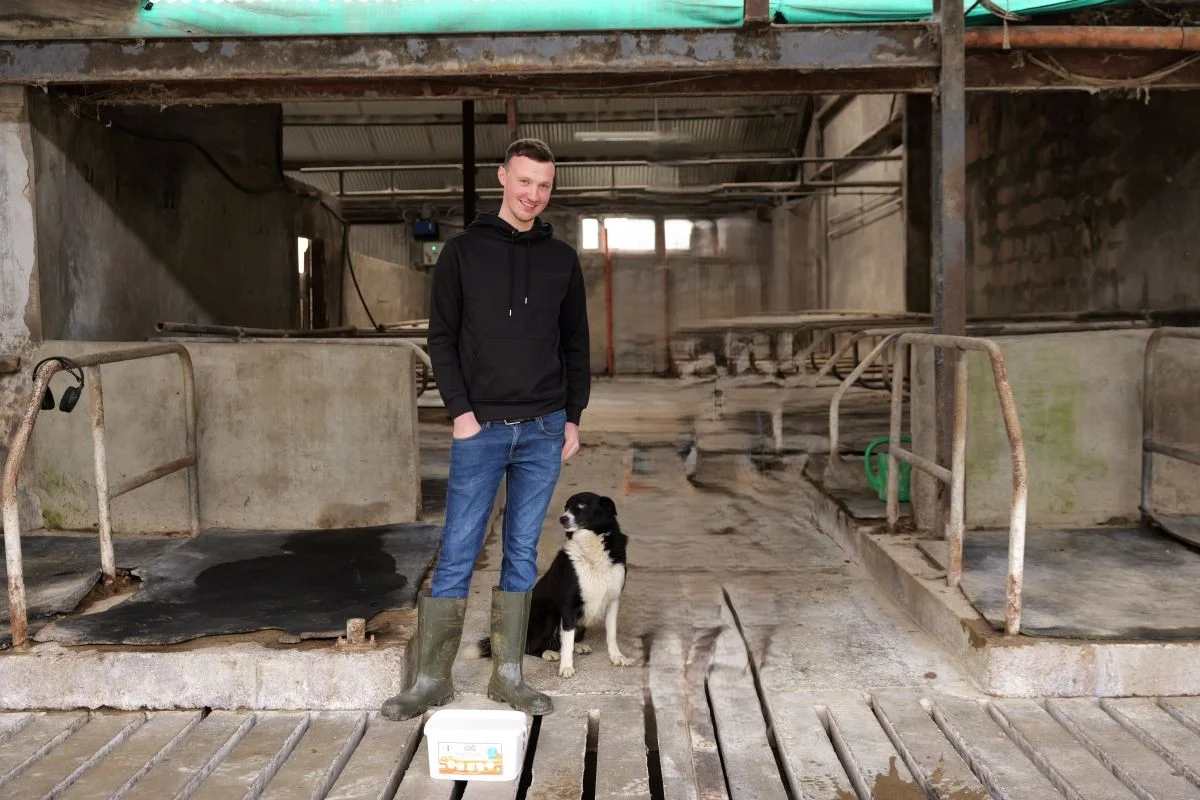
Scaling a dairy enterprise brings opportunity — but it also brings pressure. More cows means more calves, more labour demands, more exposure to health challenges, and less margin for error. For Brendan Ryan, a dairy farmer based in Oola, Co. Limerick, growing his herd to 250 cows made rethinking his entire calf management system critical, especially from a labour point of view.
The changes he made — a new calf shed, an automatic JFC calf feeder, and the introduction of BioBalance, sourced from his local Dairygold Co-Op Superstores branch in Old Pallas — have transformed how he rears calves. The results have been clear across every metric that matters: health, uniformity, weaning age, and labour.
“It’s the best money we’ve ever spent,” he says.
A tighter calving window can bring its own challenges
With a herd of 250 cows and a six-week calving rate now running at over 80%, the spring period is intense. That concentration of calving, driven in part by the installation of Allflex heat detection collars which increased his six-week calving rate by 10–15%, means large numbers of calves arriving in a short window and going into the one shed.
“We have a very high six-week calving rate now, at nearly plus of 80 percent,” he says. “So we use BioBalance to act as a preventative for the calves. Because if a disease or scour comes into the shed, it’s very hard and time-consuming to administer doses to calves at such a large number in one shed.”
This is one of the core challenges of high-output spring calving systems. The more calves in a shed at any one time, the faster a health challenge can spread — and the more labour-intensive the response. The logic behind prevention is straightforward: it is far easier to keep a hundred calves healthy than to treat twenty sick ones.
.
Investing in Infrastructure — and Nutrition
To meet the demands of a larger herd, Brendan invested in a new calf shed with an automatic calf feeding system with JFC, significantly increasing his capacity. BioBalance is dispensed through the feeder in every litre of milk the calves receive — meaning every calf gets a consistent, measured dose without any additional labour.
“We find this very important — investing in the next generation,” he says. “It gives the calves a great start in life.”
For farmers running large numbers through an automatic feeder, the integration of BioBalance directly into the feeding system is a significant practical advantage. There is no need to handle calves individually to administer the product — it is built into the routine from day one.
“It has really simplified our system, even with 250 cows,” says Brendan. “By adding BioBalance to the feeds for calves this spring, we’ve realised that we could nearly get out of the way, let the calves reach their full potential with less intervention and way less labour.”
What Is BioBalance?
BioBalance is a next-generation postbiotic liquid supplement designed to support gut development and early-life performance in young ruminants. Unlike probiotics — which are live microorganisms that must survive digestion — postbiotics are fermented outside the body and deliver beneficial metabolites directly, making them more stable and consistent in effect.
BioBalance also contains plant extracts that provide naturally occurring bioactive compounds to support gut balance during early life — helping maintain digestive comfort, support microbial balance, and complement the activity of the postbiotic component during the period when the calf’s digestive system is still maturing.
The active ingredient, Saccharomyces cerevisiae fermentation product (SCFP), is backed by 21+ academic studies and field trials, including 15 peer-reviewed publications, demonstrating improvements in gut structure, daily weight gain, feed intake, and resilience in young calves. Research also shows a direct link between strong early-life performance and improved lifetime productivity — including higher milk yield in first lactation.
For Brendan, BioBalance also plays an important role in supporting the transition from whole milk to milk replacer. “They’re used to getting BioBalance in their stomachs and it also helps the transition from whole milk over to milk replacer when they go to the calf feeder,” he says.

Prevention as a Management Strategy
The philosophy that underpins Brendan’s approach to BioBalance is one that more and more farmers are adopting: prevention is more efficient, more cost-effective, and less stressful than cure.
“Prevention is a lot better than cure,” he says. “When we go into the shed, we’re trying to prevent a problem happening before it does, so we act very, very quickly.”
Brendan’s monitoring system is built around the feeder data. Each morning, the first thing he does is check which calves haven’t drunk in their last feeding window. If a calf hasn’t finished its allocation, or shows any early signs of being off — a touch of nutritional scour, slightly dull — it gets an extra 20ml of BioBalance for three consecutive days, alongside a sachet of electrolyte in water.
“Where there’s a calf slightly off, it gets 20ml extra on top of what they’re getting through the feeder for three consecutive days, with a sachet of electrolyte in water, and they’re back to full health very, very quickly — before you have a very sick calf.”
This early intervention approach has had a measurable impact. “This has greatly reduced the vet bill, the labour on treating sick calves, and calf health overall is far better than what it used to be.”
The speed of recovery is something Brendan returns to repeatedly. “It’s as good as no setback for the calf. They’re flying it. And if they had to get a bit of electrolyte with that, they react very quickly and they’re back to full health very, very quick. All because they had an amount of BioBalance in their system.”

Uniformity, Weaning Age, and Weight Gain
Beyond health, the impact Brendan notices most is in the evenness of his calf group. In a large system where calves of different ages and sizes are moving through the shed simultaneously, variation within the group creates management complexity. Calves that fall behind require longer on milk, more individual attention, and additional inputs — all of which add cost and labour.
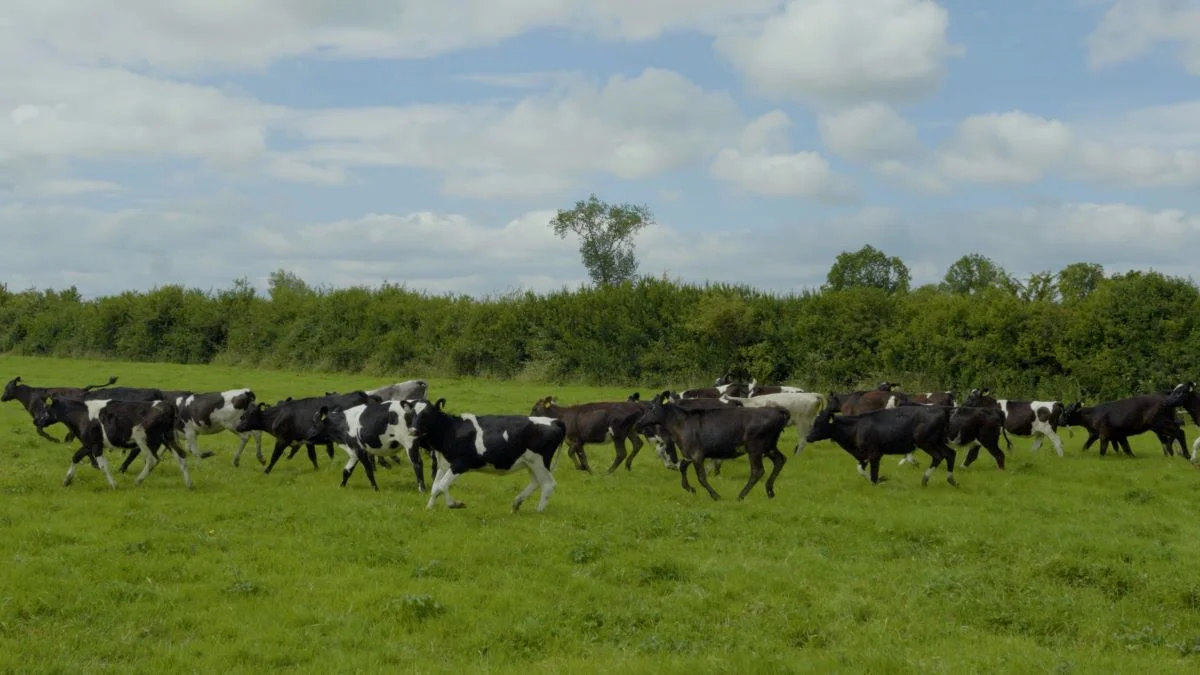
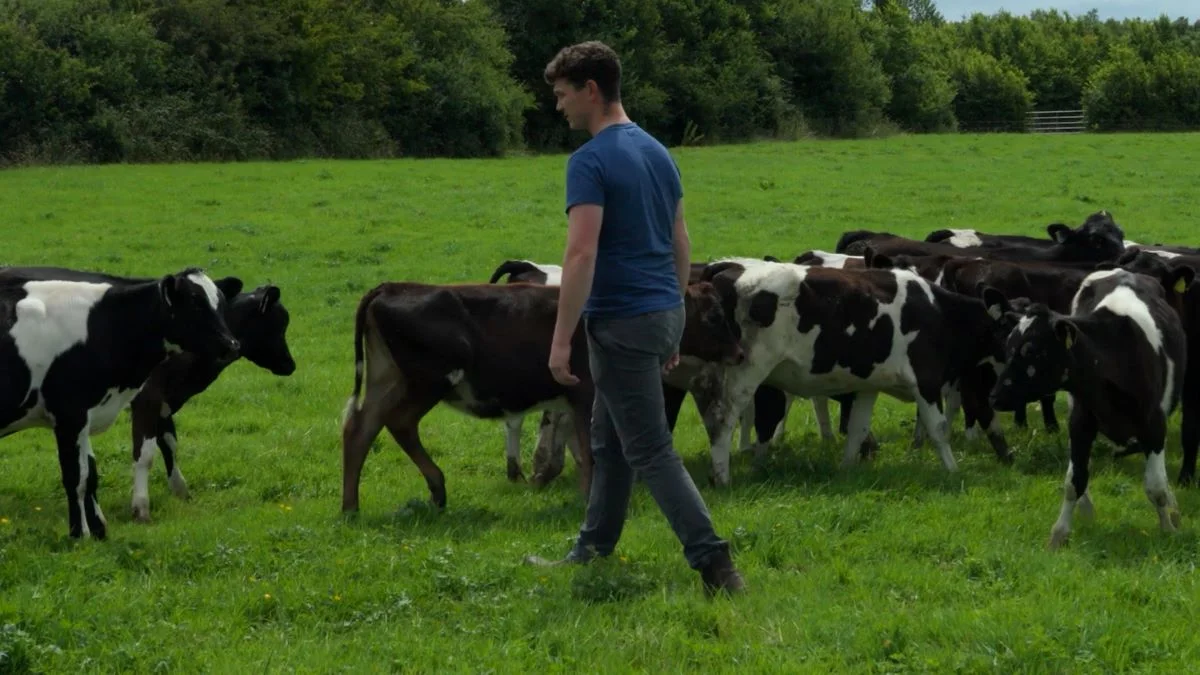
“Since using BioBalance, the variation in weight is way smaller,” he says. “You wouldn’t pick out the younger calves in the field since using BioBalance, because with using the preventative now, calves react way quicker and they catch up. They recover and they catch up way quicker, and they pass out the other animals.”
Previously, this variation was a recurring problem. “We would have had animals in the past — even the older calves — that we would have had to maybe keep on milking a lot longer because they got a setback and they didn’t recover quick enough. We don’t have that issue anymore.”
The result has been a measurable improvement in weaning age. Every calf this year was weaned before 70 days. In previous years, some calves were held back to 80 or 90 days due to health setbacks that slowed their development. Earlier weaning reduces the cost per calf and frees up capacity in the system — compounding the return on investment from the product itself.
“Calves are being weaned earlier than what they used to be,” he says. “Heavier weights at weaning at a younger age. There’s years gone by where we would have some calves held back for 80–90 days because they might have got a setback when not using BioBalance. Didn’t recover quick enough. But we didn’t have that problem this year because we used BioBalance as a preventative, and the return on investment has been great from it.”
The Verdict
For Brendan, BioBalance has become a non-negotiable part of his system — not an optional extra, but a foundation investment in the performance of every calf that comes through the shed.
“Use it as a preventative as opposed to a cure,” he says. “Use it for both, but if used as a preventative, you will be curing less animals because they will not be sick.”
Visually healthier calves. Higher weight gain. Earlier weaning. Reduced vet bills. Less labour. For a farmer who has doubled his herd size and built a system designed to run efficiently at scale, the value is unambiguous.
“It’s the best money we’ve ever spent.”
For more information on BioBalance or to discuss a calf nutrition programme for your farm, get in touch with our team.