
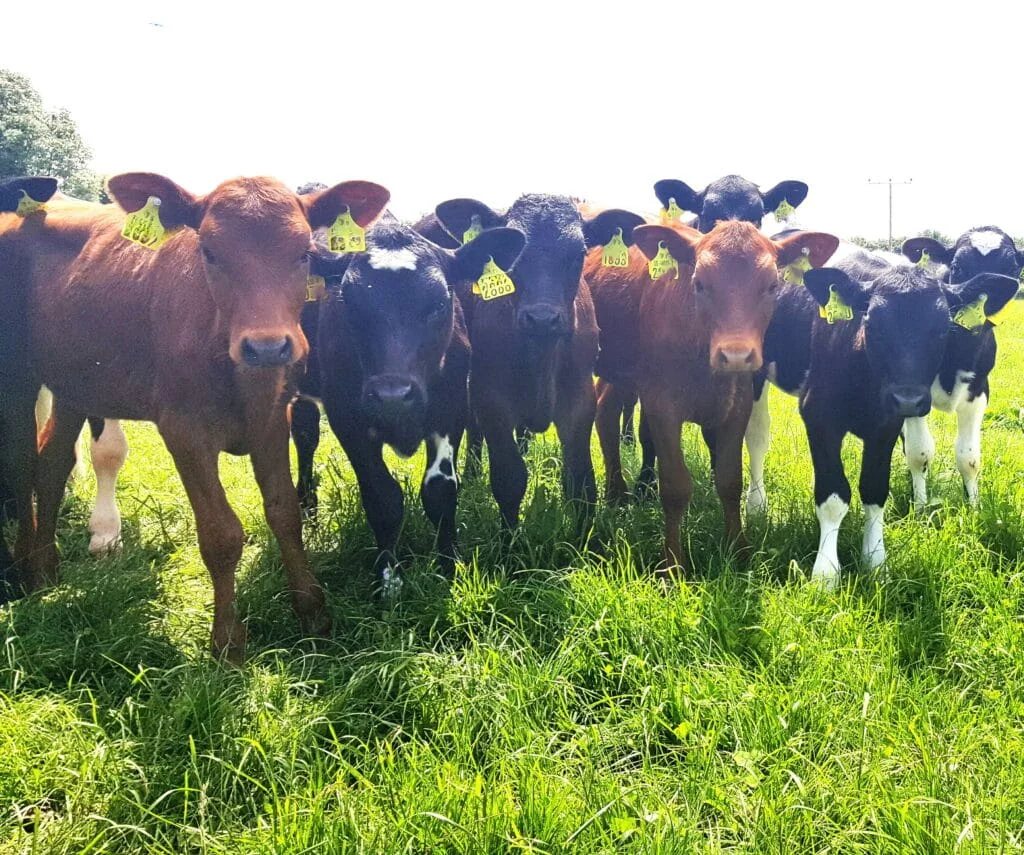
Summer Scour Syndrome – A major performance killer at grass
We normally associate Scour with housed calves, high density housing, variable weather, high humidity, damp environments etc… all contribute to the challenges that the young calf faces in early life.
Over the last 6-8 years we have been encountering significant issues at grass for young calves. Quite often these calves are flying along, performing very well indoors, gaining weight well, eating and drinking steadily, and then turnout:
Loose Dung, Scruffy Coats, Bellyish, reduced appetite, coughing, maybe even weight loss. No obvious disease issue, vaccinations and parasite control is up to date…. It leaves us with one conclusion to draw – SSS – Summer Scour Syndrome.
Summer Scour Syndrome is a multi-factorial digestive and immune challenge, one that undermines growth rates and lifetime performance of young calves, especially in those first weeks after turnout.
We say that SSS is multi-factorial, so let’s have a look at two of the main factors that can contribute:
Rumen Development
In young calves the Rumen is still developing, it is important to remember that a ‘naturally suckled calf’ will not have a fully ‘forage adapted’ digestive system until it is 4-6 months of age, and often maintains some milk dependency until it is 9-10 months of age, so in our current calf rearing systems, we are asking for calves to be forage adapted in much shorter timeframes. In order for a calf to be developed enough to have forage become the main source of nutrients, the digestive system needs an ‘accelerated development’ This is driven predominately by solid feed intake, and within that it will be starter feed that will be the most important factor – starter feed ferments and produces Volatile fatty acids which stimulates GI Tract development
They need to hit some big milestones, early on in life
- Week 1 – Some consumption of Starter feeds, fresh water intake, nibbling on fibrous forages
- Week 2 – Active consumption of Starter feeds, fresh water and more straw / hay consumption
- Week 3-4 – The rumen should be starting to populate with Microbes, Volatile Fatty Acids start to be produced by fermentation in the rumen and contribute to nutrient requirements ( this is where you would notice growth rates lifting vs calves that are milk fed with little or no solid feed intake ) we would like to see 300g + starter feed consumption per day
- Week 5-6 – You should notice changes in faecal consistency – fibre intake should lead to a darker coloured faeces, with more solid texture starter feed should increase to 500g per day – you should be offering more than this so as not to limit intakes
- Week 7-8 – Calves may begin chewing their cud and actively ruminating, consuming closer to 1kg per day.
- Week 8+ when they are consistently consuming 1.5 – 2 kg of starter feed, have good water intake and seem healthy they can be weaned.
Underdeveloped immune system
Calves are born with a naïve immune system, depending on what has been passed on during pregnancy, via colostrum, and then over the next weeks, what their own immune system develops. While these natural immune functions are developing, calves are very susceptible to illness, especially if there are stresses involved, this can affects feeding behavior, vitality and performance. Some of these stresses include:
- Social stress – grouping, regrouping and mixing of groups can cause stress and anxiety for the calf
- Environmental stress – especially turnout can be a stressful time for calves, used to warm, sheltered environments, where they know exactly where their feed and water are, and there is no requirement to graze grass, something they have to learn gradually, changes in weather, swings in temperature between day and nighttime also require a lot of adjustment, and change is stressful for calves.
- Disease stress – New, wetter environments, perhaps new groups, and certainly exposure to new or different pathogens will exacerbate stress and its effects.
So, to summarize why SSS happens, it is generally initiated as a result of Nutritional Transition Stress – the calf is moving from a milk based diet to a forage based diet, but this diet requires a functional digestive system, which is not always the case. The calf itself would do better with consistent forage quality, something which is difficult to present in a grazing scenario, grazed grass fluctuates in Dry Matter, Fibre, Sugar content and Protein content. This stresses the calf, and when calves are stressed their feed intake reduces, this slows rumen development, and it can weaken the immune system.
At the same time challenges at the Gut level are increasing – Outdoors, calves are exposed to Environmental Bacteria, Protozoa and Coccidia, worm larvae and sometimes other nutritional pathogens such as mycotoxins. Warm, wet conditions, like those we typically experience in May, June rapidly increase the challenge pressure. What we see is an accumulation of challenges, each on their own capable of slowing performance – what we would often refer to as a ‘check’ on the calves after turnout.
Finally we have the Gut-Lung connection – the link between digestion and respiration is often overlooked, a compromised gut often becomes inflamed, is less efficient and less effective in its role as a driver of immune function. This increases susceptibility to respiratory diseases such BRD and Pneumonia.
Often we see loose dung, followed by coughing episodes, and we see calves that fall behind, and maybe never catch up. Every year I get asked for a product to ‘solve’ the problem of Summer Scour Syndrome, but the more we look and learn about it, we are understanding that the solution lies in preparation, careful management and gradual adaptation.
The solution for me:
- Support Gut Development from as early as possible
- Focus on solid feed intake before, during and after weaning
- Keep fibre available at all times – especially after turnout
- Make every transition gradual
- Minimize stress
- Have a coherent parasite strategy
- Support health through trace elements and vitamins
- Don’t be in a rush to turn calves out, especially on a full time basis
- Avoid fresh leafy grass that rapidly ferments when eaten – long fibrous material is your friend.