
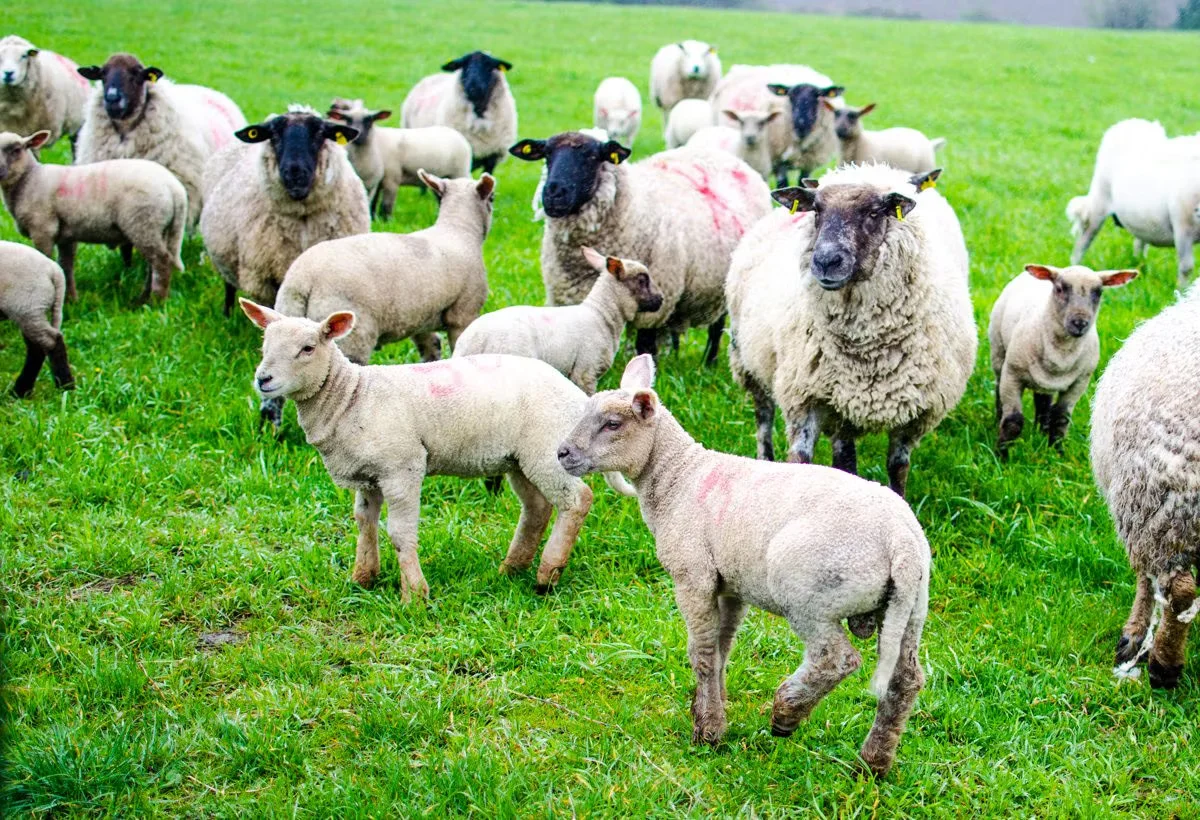
Many of the early season lambs are coming fit at this stage, and perhaps the first of the mid season lambs too. Good lambs, reared on good milky mothers, with perhaps a bit of help from the creep feeders are excellent converters, growing rapidly and filling a market where the price of Lamb seems to be trending positively. No Problems!
The thing is, the return from the first batches of lambs always seems good, but it can be diluted by the later lambs, the smaller lambs, those fellas that just done seem to thrive on as well. At the end of the year, your returns will be done on the average price received, the average weights, the average performance.
Did the ewe lack milk? Did they get enough colostrum and the good start to life that would usually set them up for good growth rates? Are they just Genetically not as good as some of the others? These questions should drive you to cull harder, think about ram selection and look at your lambing protocols for next year.
What can we do right now, in June, to get these lambs going as best we can and shorten their days on farm, reduce the cost of finishing them and get them to sale at good weights for the maximum return?
Priority Grazing: for lambs at this time of year, they are becoming less dependent on milk for their growth and development, they need access to the best quality grass, and plenty of it, lambs graze selectively so being able to creep ahead of ewes will help to boost them on, maintain good access to creep feed also at this time to maximise energy intake. Don’t forget about fibre in the diet, keeping even a small amount of hay or straw available to the lambs will allow them to manage it for themselves.
Parasite management: keeping on top of the parasite burden that is surely growing at this time of year is critical, Faecal Egg Testing is the go to option here, to know what your burden is, what the sensitivities are, when is the optimum time to treat and what is the correct product to treat them with. Parasites will magnify any issues, especially if any of those weaker lambs are in any way immune suppressed.
Mineral Supplementation: Trace elements and minerals in general can have a big impact on lamb performance, they drive Rumen efficiency, Vitamin B12 production, Appetite and feed utilization, not to mention health, immunity and resilience. Weaker lambs, as much as they might have been on the hind teat, or maybe out competed at the creep feeder, in turn may well have some trace element deficiencies. Cobalt & Vitamin B12 go hand in glove, and are a very cheap and easy starting point to kick start these lambs, Selenium & Vitamin E help to boost immunity, Zinc and Cobalt for coat, hoof and horn as well as fat deposition and red blood cell production and Iodine for thyroid function, helping to control appetite, hormonal development and ultimately weight gain.
It’s not one single thing usually, and inevitably there is going to be better and poorer performing lambs, but reducing the gap from the top, by helping the bottom end of the lambs is one of the best things you can do to reduce your average age at slaughter, and ultimately reduce your costs.