Dúnmasc Genetics is an Irish bovine genetics company that buys high EBI dairy bull calves from farms across the country, develops them through quarantine and health testing, and sells semen both domestically and internationally. Established in 2014, they’ve grown into one of the country’s leading genetics providers, offering conventional and sexed semen from some of Ireland’s top dairy sires — all IP-free, so farmers retain full ownership of the progeny.
The mission is to get the newest genetics into customers’ hands as fast as possible. But between buying a calf and collecting straws, there’s a demanding pipeline. Transport, diet changes, quarantine, health testing, growth targets — every stage carries risk, and any setback delays a bull’s path to production.
BioBalance has become part of that pipeline.
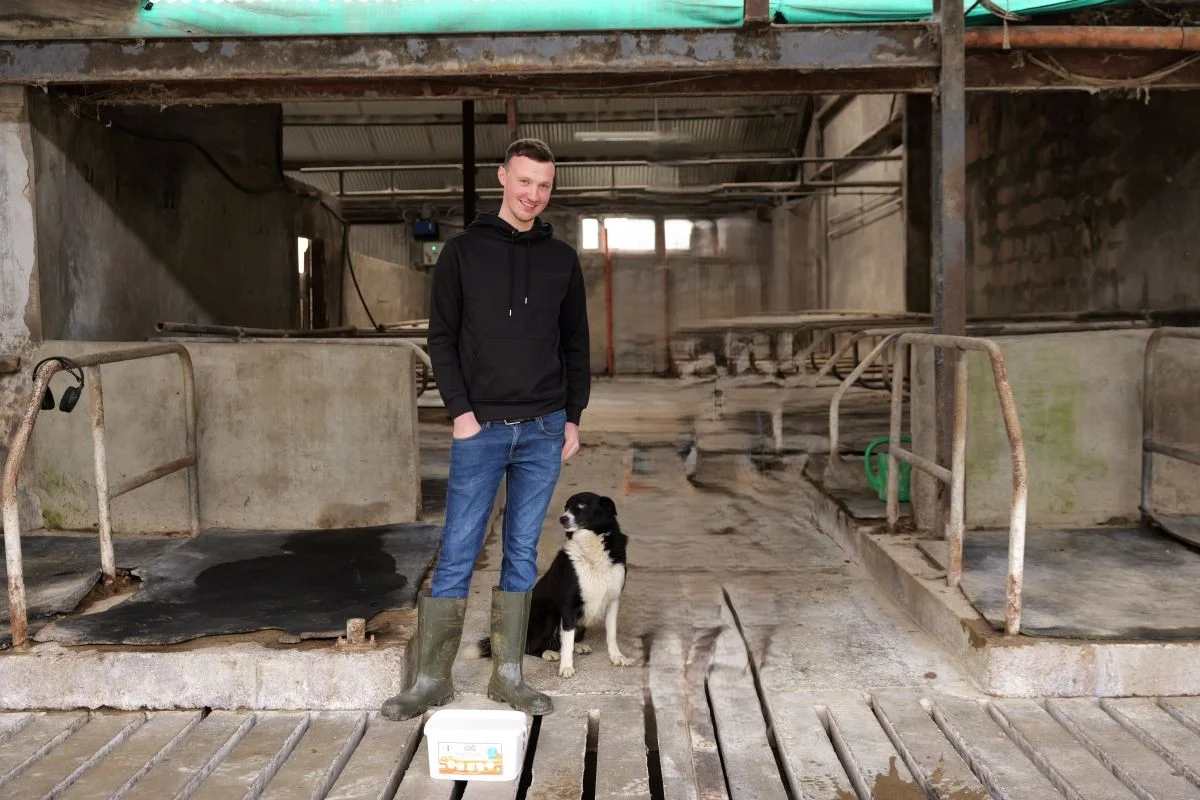
Leanna McNamara is a Technical Vet with Dúnmasc, overseeing the health programme from calf arrival through to collection. She sees BioBalance not as a standalone solution but as a key part of a system built around giving calves the best possible start.
“We gave them an excellent quality concentrate, excellent quality fodder, great calf comfort, excellent cleanliness, and BioBalance was a part of that equation too.”
From Farm to Stud — A Multi-Stage Journey
Getting a bull from an Irish dairy farm into a semen collection centre is not a quick process. The testing regime alone is exhaustive — IBR, Johne’s, BVD, Neospora, Q-fever, Bluetongue, TB, and Brucellosis, among others. A failure at any point means a bull can’t make it to stud. For a company that has sourced many elite dairy and beef bulls directly from Irish farms in the past 18 months alone, the volume of animals moving through this system is significant.
“That process involves testing both the bulls and the dams and health inspecting them. If they pass those tests, they’re then moved to our pre-quarantine facility and they’re retested and go through an ordered quarantine period. If they then pass that, they’ll enter the next phase of quarantine and again will undergo blood testing, and if they’re the appropriate age, they’ll be fertility tested.”
At every stage, health status and body weight are interlinked. A bull that gets sick loses condition. A bull that loses condition falls behind on growth targets. And a bull that doesn’t hit its targets doesn’t reach sexual maturity on schedule.
“We want to get the newest genetics to our customers as soon as possible, so in order to ensure that the next generation of genetics gets there as efficiently as we can, we have to ensure that the dairy bull calves reach target weights and have excellent health status.”
Why Early Nutrition Decides Everything
The link between early-life nutrition, body weight, and sexual maturity in dairy bull calves is well established. Research published in the Journal of Dairy Science has shown that Holstein Friesian bull calves offered a high plane of nutrition during their first 12 weeks — targeting growth rates of 1.0 kg/day versus 0.5 kg/day — had significantly greater slaughter weights (112.4 vs. 87.7 kg) and testicular tissue weights (29.2 vs. 20.1 g), with gene expression patterns consistent with more advanced sexual maturation. In plain terms: calves that thrive early reach sexual maturity sooner.
For Dúnmasc, that research translates directly into practice. They feed calves for longer than most — up to 16 weeks of age, three litres twice a day — with BioBalance as part of the protocol. Getting bulls in young and onto the right programme from the start is the single biggest lever they have.
“There’s a very strong link between body weight and sexual maturity and the sooner we can get the bulls to sexual maturity the sooner we can get straws off them.”
“The longer we have them under our watchful eye and in control of what nutrition and management strategies they’re receiving, we found a great difference in the thrive of the bulls when we can get them in from that younger age, getting the nutrition that we want, feeding them BioBalance and having the correct environmental conditions.”
BioBalance supports gut development during the milk-feeding phase. With so much of a calf’s immune function rooted in the gastrointestinal tract, that early foundation has consequences that extend well beyond the first few weeks of life.
“BioBalance provides support to the gut to allow the immunity to develop and give the calves the best chance for the future. For us that means achieving greater fertility and for the average farmer that means achieving greater production.”
Managing the Stress of Arrival
Dúnmasc buys calves from farms all over Ireland. Every one of them arrives having gone through the same stressful transition — transport, a sudden change in diet, a new environment, and introduction to unfamiliar animals. That combination of stressors is a reliable trigger for digestive upsets, and in a conventional setting, scour would be expected.
“We’re buying calves in from all over Ireland and that means there’s transport stress to get to farm. When they get to farm they’ve changed in diet. They also have changes in environment and stress as well as introduction to new animals.”
Dúnmasc’s approach is to front-load the BioBalance, using a higher dose on arrival to support the gut through the transition period. The logic is preventative — stabilise the digestive system before problems have a chance to take hold.
“All those things combined create potential for digestive upsets and scours and so we’re trying to mitigate those risks by feeding them BioBalance. By feeding them the higher dose when they arrive we found a very good result with very little digestive upsets in calves.”
Zero Veterinary Intervention for Scour
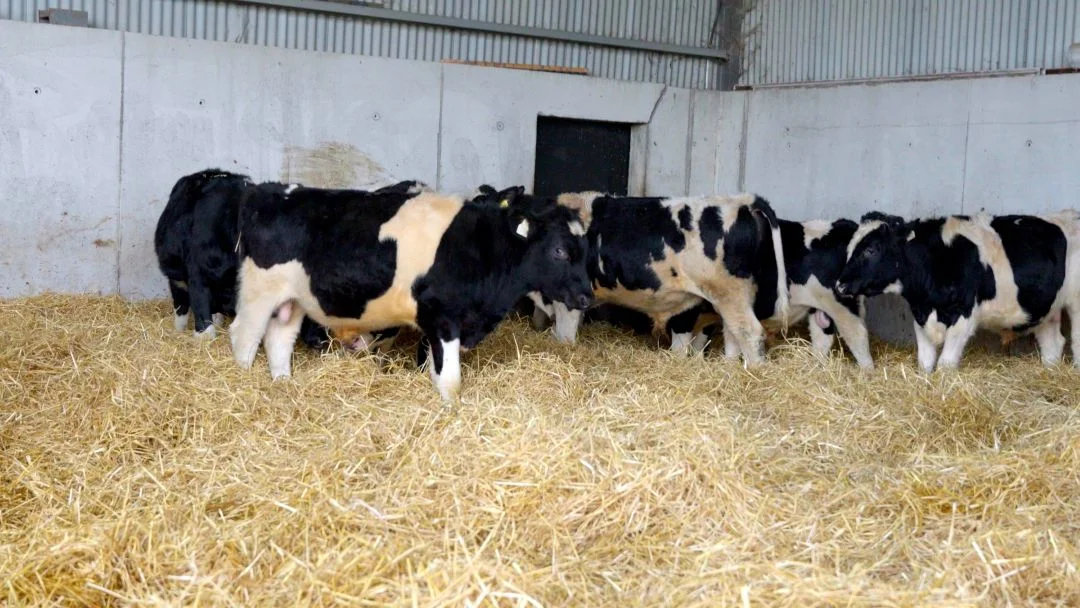
The results this year were unambiguous. Across the entire programme, Dúnmasc did not have to call the vet for a single scour outbreak. Not one calf was injected or medicated. The only treatment given was electrolytes in the water for one batch that arrived during hot weather — a precaution, not a response to illness.
“Having used BioBalance this year, we had to have no veterinary intervention for scour outbreaks. The only time that we had to give any sort of treatment was one batch of calves came during hot weather and we gave them electrolytes in the water, but no one needed to be injected or medicated for scour.”
For any farmer, that’s a good result. For a genetics operation handling high-value bulls under strict biosecurity, it’s critical. Every time you handle an animal, you introduce risk — stress, potential cross-contamination, disruption to the routine. In a system where something like an IBR outbreak could permanently disqualify a bull from ever reaching stud, minimising interventions isn’t just about cost. It’s about protecting the pipeline.
“It’s costly, it’s labour intensive and it’s stressful. There’s extra pressure not to have to intervene because we want to handle the animals as little as possible. We don’t want to potentially spread any sort of infection between animals and we want to keep the stress at a minimum.”
Biosecurity and Welfare
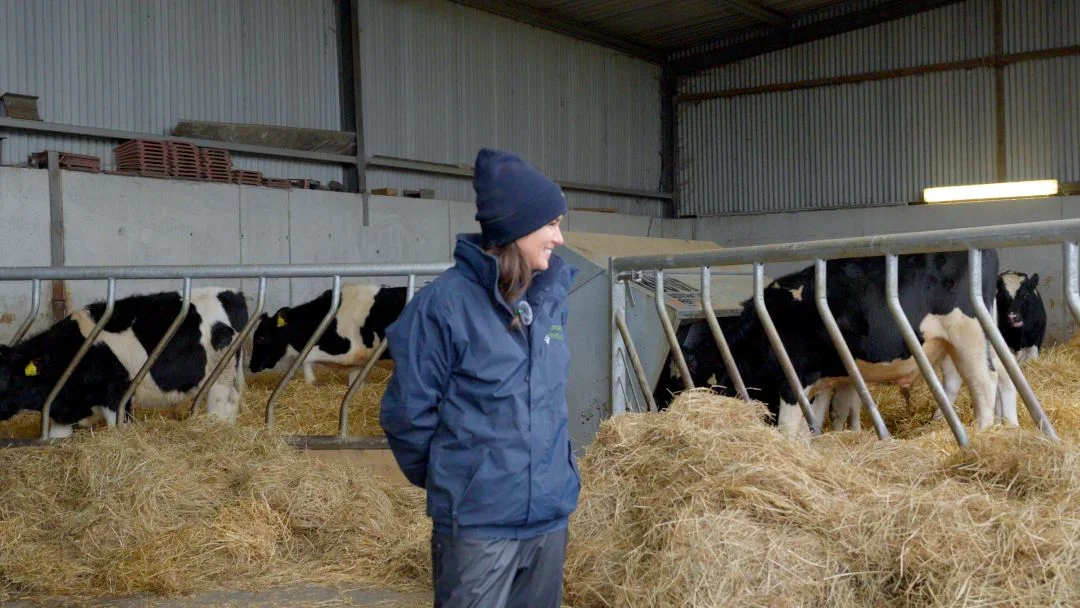
The biosecurity protocols at Dúnmasc reflect the stakes. Visitors wear overalls and boot covers. Every staff member working with animals has a dedicated set of waterproofs and wellies for each individual farm. Boot dipping between pens is standard.
“Biosecurity is extremely important on any farm but for us, biosecurity is absolutely paramount and a mistake could be extremely costly. Something like an IBR outbreak could mean that animals will never be able to make it to a stud and that would be catastrophic for us.”
Welfare is built into the system too — toys for enrichment, scratch brushes, and a robust herd health plan at every stage. The goal is to keep animals healthy, comfortable, and on track. BioBalance fits into that philosophy as one more layer of preventative support.
Calves That Thrived
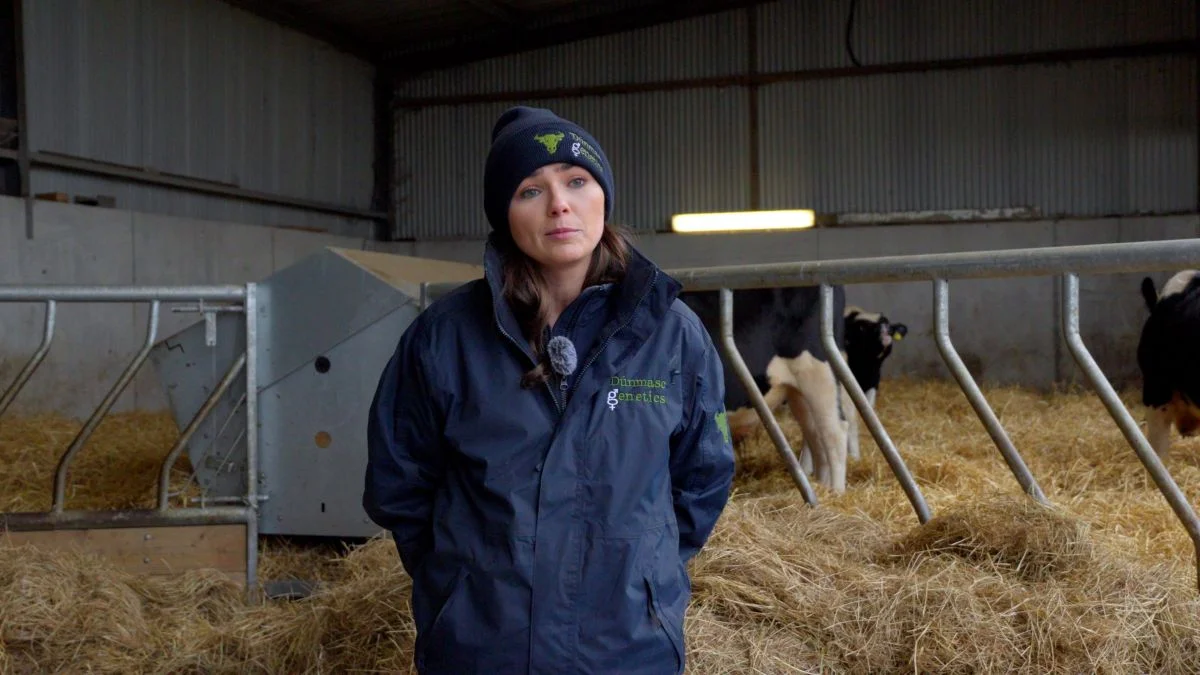
On the practical side, BioBalance fitted into the existing feeding protocol without friction. It mixed well with the milk, the calves took to it immediately, and the results were visible in how they carried themselves — energy, form, and thrive from the outset.
“The BioBalance mixed really well with the milk and calves love the taste of it. They’re always up really quick to drink. Animals were in great form, very energetic and they really did thrive.”
For Dúnmasc, setbacks don’t just cost money — they cost time in a system where time is the entire competitive advantage. A bull that falls behind on weight reaches sexual maturity later. A bull that gets sick during quarantine may never make it to stud. And with Irish farmers and international distributors waiting for the latest genetics, every week of delay is a week the competition has that you don’t.
“Setbacks are costly whether it be for a genetics company like ourselves or any commercial farm across the country. We want to make sure that we give our animals the best chance to reduce any risk of a setback because we want to ensure that they can reach their targets as efficiently as possible.”
To find out more about BioBalance for your own calves, get in touch with the Natural Stockcare team or visit the full Natural Stockcare product range.