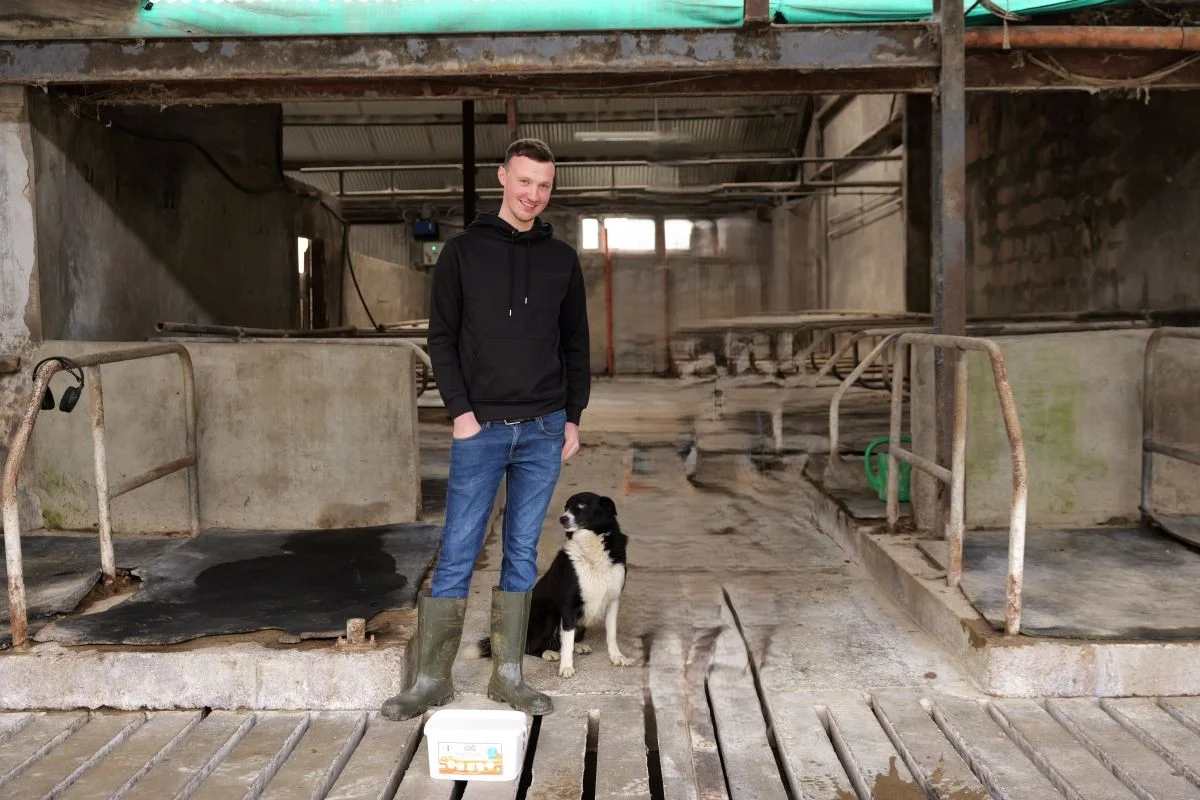
Seamus Quinlan has been milking cows on his farm in Co. Tipperary for 40 years. He runs a herd of 60 and rears around 20 calves each year on whole milk. It’s a spring-calving block, with cows starting in early February and finishing by the end of March.
The calf-rearing side is simple enough in principle. Calves get colostrum and transition milk for the first couple of feeds, then move onto whole milk. When things go well, it’s a low-input system — feed them, check them, and move on. But when scour arrives, it changes everything.
When Scour Takes Hold
Two years ago, Seamus had a spring he’d rather forget. The first two pens of calves — 18 head — came through clean. Then scour hit, and it ran through every calf that followed.
“The first two pens, the first 18 calves were fine, and then I started to get the scour and it ran through all the calves after that. I had a lot of hassle with them. I didn’t lose any of them, but every calf after that did get scour.”
He didn’t lose a single animal, but survival and thrive are two different things. The calves that scoured were set back ten days to two weeks. They stopped thriving. They needed electrolytes, injections, and constant attention at the busiest time of year. And even after they recovered, they were playing catch-up — requiring extra meal just to get back to where they should have been.
“The calves aren’t thriving and then they’re giving you ten days, two weeks not thriving. And it’s much more labour involved in trying to keep them fed as well.”
The real cost wasn’t just in vet bills or product. It was in time. A healthy calf takes minutes. A sick calf takes three times as long — and when you’re milking 60 cows and calving at the same time, those minutes add up fast.
“It takes three times as long to feed sickly calves if you have to go give them electrolytes and injections and everything else. If they’re healthy it’s very little — just go in, give them milk and have a look at them and they’re okay. There’s a big labour saving in that.”

Trying Something Different
After the trouble he’d had, Seamus was looking for a different approach. Liam O’Donnell at Star Fuels introduced him to BioBalance from Natural Stockcare — a liquid blend of postbiotics, metabolites, and natural plant extracts designed to support gut health, rumen development, and immune function in young calves. Dosed at 20ml per calf daily for 28 days, it works by strengthening the microbiome and epithelial barriers in the gastrointestinal tract from the outset — a preventative approach rather than waiting for problems to appear.
Seamus decided to give it a go. The results spoke for themselves.
Zero Cases of Scour
This spring, not a single calf scoured. Not the early ones, not the later ones, not even when different age groups of calves were sharing the same pens — something that in previous years had been a reliable trigger for problems.
“I got no scour at all this year. Usually I’d have different lots of calves in the same pens again and that can be a big problem if there’s scour at all. I had no trouble this year at all — even the later ones, the youngest of them, there was no problem with them.”
On a farm where scour had been an annual certainty, that’s a significant shift. And it came without any other major changes to the system — same shed, same calving pattern, same whole-milk feeding.
“Whether I can put it all down to BioBalance, I don’t know, but definitely I’m going to go with it again next year.”

Calves That Thrived From Day One
The absence of scour was the headline, but Seamus noticed differences beyond that. The calves this year didn’t just avoid getting sick — they actively thrived. Better coats. Eating meal earlier and more readily. No setbacks at any stage, from the first-born through to the last.
“The calves didn’t get any setback and they’re thriving. They seem to be even eating the meal better from the beginning. They just seem to thrive straight away — better coats and all than last year.”
By the time of the interview, the calves were all hitting their target weights at a young age — a uniform group rather than the usual mix of strong calves and ones still trying to recover from an early setback. That uniformity matters. It means less sorting, less supplementary feeding, and calves that are on track to fulfil their genetic potential rather than spending months catching up.
“You don’t have to be separating out smaller ones and trying to feed extra, which is labour-saving as well. It takes extra meal then to try and bring up the ones that got a bad setback. It’s definitely easier not to have to do all this.”
The Labour Difference
For a farmer milking 60 cows and calving 20, labour is the bottleneck. Seamus came back to this point repeatedly. Healthy calves aren’t just better for margins — they’re better for the farmer.
When scour runs through a shed, the workload doesn’t just increase — it multiplies. Each sick calf needs individual attention: electrolytes mixed and administered, injections given, progress monitored. The healthy calves still need feeding. The cows still need milking. It all has to happen at the same time, and in spring there aren’t enough hours as it is.
“It was a lot easier and a lot less time-consuming. You just have to put in the milk and see that they’re all drinking okay. When the scour isn’t in the shed at all, you don’t have to give too long looking at them.”
This year, the calving routine was what it should be — straightforward, predictable, and manageable for one person.
The Economics
BioBalance works out at roughly €10 per calf for the full 28-day course. On paper, that’s a cost. In practice, set against the alternative — vet treatments, electrolytes, extra meal for recovery, and the labour of managing sick calves during the busiest weeks of the year — it’s not a comparison.
“Compared to treatment for the calves and the setback, that wouldn’t be very expensive. Plus the setback, plus the extra labour when you’re very busy in spring time — it’s definitely worth it.”
There’s also the less visible cost of scour that doesn’t show up on a receipt: calves that take weeks to recover don’t hit their target weights on time. They eat more meal for less gain. And the farmer’s time — already stretched thin at calving — gets eaten up by crisis management instead of the routine work that keeps everything else on track.
Prevention Over Cure
If there’s one theme that runs through the conversation, it’s this: preventing scour is not the same thing as treating it. Treatment keeps calves alive. Prevention keeps them thriving. The difference in outcome — in weight gain, in labour, in cost, in stress — is substantial.
“The calves thrive better and there’s less time and expense and a big labour saving in not having to treat the calves for scour. It’s definitely better to prevent scour than to treat it.”
Seamus sources his BioBalance through Star Fuels. After one season, the decision for next year is already made.
“I’d recommend it for farmers. I was very happy with it this year and I’m going to use it again next spring.”
If you’d like to find out more about BioBalance for your own calves, get in touch with our team or visit the full Natural Stockcare product range.