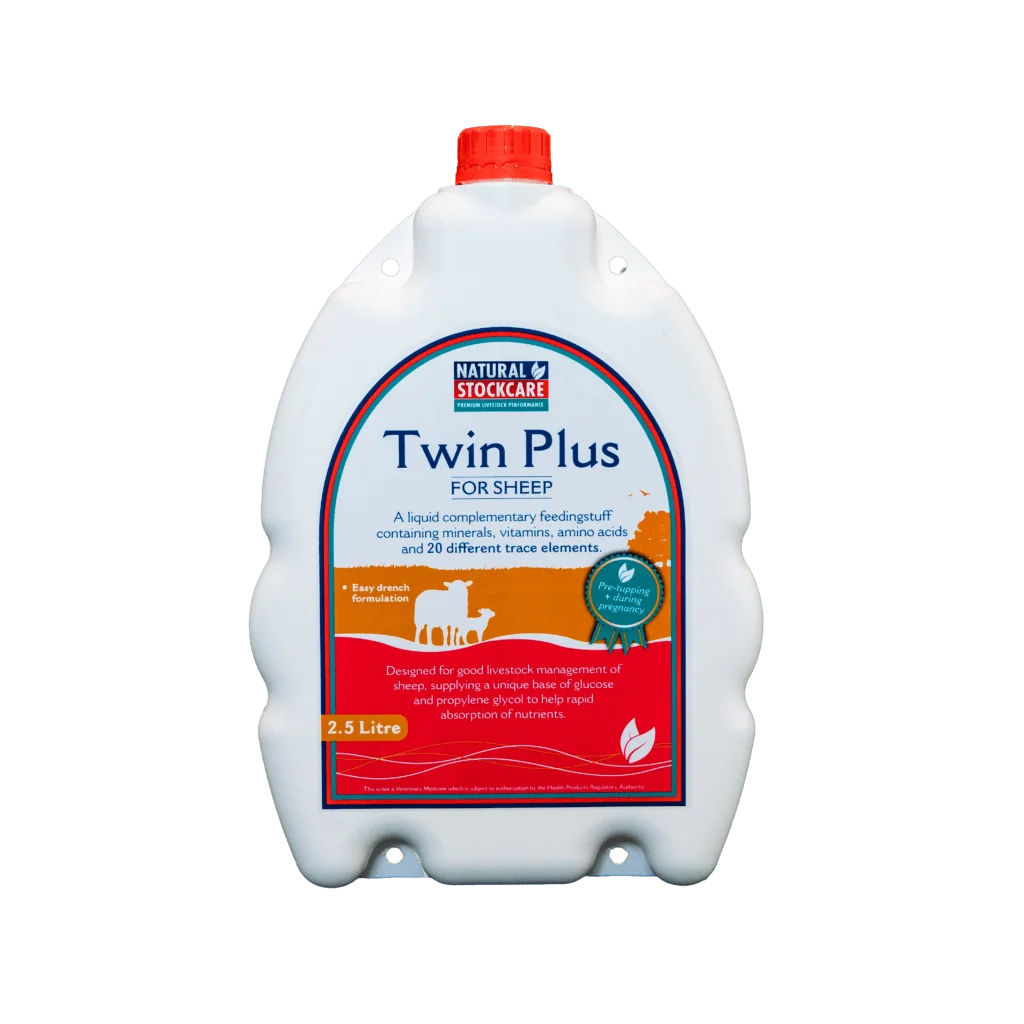
Sheep Welfare Scheme Approved- Ireland
Does not contain Copper
“We’ve been using Twin Plus and Cobalt B12 on our farm for almost 15 years, and we’ve seen a significant increase in our lambs weaned each year. Twin Plus has been especially effective in bringing up the body condition of our ewes before breeding, resulting in a higher number of healthy lambs at birth. We give all our lambs Cobalt B12 to ensure they thrive a few weeks after birth. These products have been a vital part of our farm’s success, and we highly recommend them to any farmer looking to increase their lambing percentage and the health of their flock.”


“We give the ewes TwinPlus four to five weeks pre-tupping. It brings the body condition score exactly where we want it, up to 3.5.
Since we began using it, our scan rates have increased to around 2.1. We give a second dose a month prior to lambing, which ensures highly vigorous lambs and less risk of twin lamb disease.
It is a really easy product to use, and we will definitely continue using it.”

Preventing and treating Twin Lamb Disease significantly hinges on proper nutrition. An adequate intake of essential vitamins and minerals is paramount (Van Saun, 2015). Deficiencies in elements such as Vitamin E, Selenium, and Cobalt have been linked with an escalated risk of this disease (Gordon et al., 2017).
Twin Lamb Disease, or Pregnancy Toxaemia, is a metabolic disorder primarily affecting pregnant ewes carrying multiple lambs. The condition manifests when the nutritional demands of the ewe exceed her intake, causing a decrease in blood glucose levels and a consequent increase in toxic ketones. If not addressed promptly, this condition can lead to dehydration, kidney failure, and in worst-case scenarios, death (Gordon et al., 2017).
Ensuring a ewe receives the proper nutrients before breeding can enhance reproductive performance and overall health. This precaution ensures that the ewe possesses enough reserves to meet the demands of pregnancy, lactation, and the development of healthy lambs (Mee, 2008). Further, it fortifies the ewe’s immune system, reducing susceptibility to diseases and infections that could negatively affect her reproductive performance (Van Saun, 2015).
During the perinatal phase, sheep and their young are exceedingly susceptible to shortages of vitamins and minerals. Insufficient nutritional intake in pregnant and lactating ewes can lead to substantial repercussions for the well-being and functionality of the progeny. Colostrum, vital for endowing lambs with the necessary nutrients to flourish, can lack several critical vitamins and minerals, notably Vitamin E (Calderon-Mendoza et al., 2018; Kelly et al., 2013). This can induce adverse effects on the health and productivity of the animals, underscoring the necessity of maintaining optimal levels of these crucial nutrients (Suttle, 2010).
Twin Plus’s unique blend and preparation of vitamins and minerals offer various advantages, such as amplified immune defence, escalated antibody production, and superior gut protection. In addition, research indicates that supplementation with vitamins A, E, zinc, and selenium can augment colostrum quality, leading to fewer lambing complications, healthier ewes, and decreased stillbirths (Calderon-Mendoza et al., 2018). Supplementation also aids in ensuring healthier lambs, fostering better thriving and weight gain (Suttle, 2010).
The nutritional requirements of ewes are significantly amplified when they gestate multiple offspring, like twins or triplets. Challenges such as adverse weather conditions, hillside pastures, poor grazing and forage, hoof issues and lameness, along with the stress of relocating to fresh grazing, can contribute to insufficient nutritional consumption (Dawson et al., 2006; Dunshea et al., 2015; Kaler & Green, 2008).
Specifically, Vitamin E has been shown to reduce the incidence of Twin Lamb Disease (Lopez-Andres et al., 2017). In addition, trace minerals such as Selenium, essential for antioxidant defence and thyroid hormone metabolism (Abdela et al., 2018), can also contribute to preventing and treating this disorder. Moreover, maintaining a high-energy base diet supports glucose metabolism, which is vital during pregnancy.
Including B vitamins, integral for energy metabolism and associated with improved lamb birth weights (Kiani et al., 2016), can further support the energy needs of the ewe and her lambs. Therefore, a balanced diet rich in essential vitamins, trace minerals, and high-energy content can effectively prevent and treat Twin Lamb Disease.
Affected ewes display distinct symptoms like separating from the flock and appearing depressed, staggering, and disoriented. Excess ketones in the blood may also give the ewe’s breath a sweet smell. As the disease advances, it can also cause blindness.
Immediate action is imperative if a pregnant ewe exhibits these symptoms. Twin Lamb Disease can be lethal if not treated, often leading to death within 12 hours of symptom onset. Therefore, early detection, intervention, and appropriate nutrition are critical for the survival and development of both the ewe and her lambs.
The prevention of Twin Lamb Disease hinges on early detection and intervention. Once a ewe exhibits symptoms such as separation from the flock, depression, staggering, disorientation, and a sweet-smelling breath, immediate attention is necessary. The disease can progress to blindness and death within 12 hours of symptom onset (Kent, 2013; Robinson, 2013).
A balanced diet, including vitamins, trace elements, and glucose precursors, is crucial for prevention and treatment (Van Saun, 2015). Proper nutrition can reduce the risk of the disease and increase survival chances for both the ewe and her lambs. Calcium supplementation may also play a role in the prevention and treatment of TLD, as it helps maintain normal blood glucose levels (Abdela et al., 2018).
Behind every product is a team committed to supporting farmers and their animals. Get to know the people who make Natural Stockcare what it is.

Managing Director

Technical Director

Key Account Manager

Key Account Manager